When Do You Need an Air Trailer on the Jobsite?
Some work sites need a mobile air source that does more than inflate tires or power a couple of tools. Fortunately, air trailers exist. These units are built for jobs where crews need dependable, transportable, high capacity air for both tools and for safe breathing.
What is an Air Trailer?
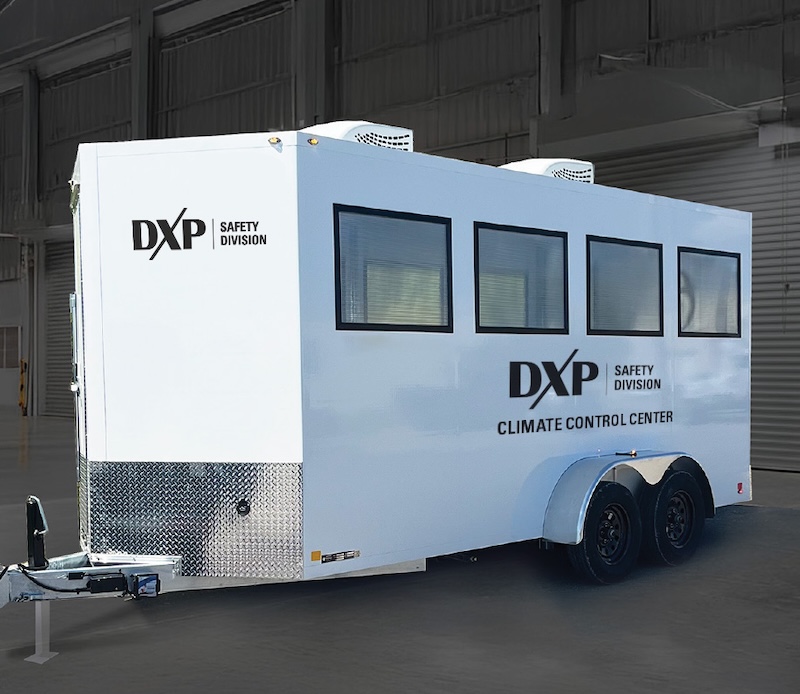
An air trailer is basically a self contained system that brings stored compressed air (and often breathing grade air) directly to the point of work. You roll it in, hook up your lines, and you’ve got air that stays clean and dry. Crews use them when running long hoses from a fixed compressor would be a headache or when the jobsite moves around throughout the day. They’re common in:
- Maintenance outages
- Emergency response
- Confined space entries
- Field work far from utility hookups
A mobile air trailer removes the hassle of constant compressor setup, fuel use, and noise near tight work areas.
When You Need One on the Job
1. Confined Space Work
Any job that forces crews inside tanks/pits/vaults/vessels requires reliable breathing air. A trailer provides a stable air source with monitored purity. Instead of juggling multiple portable units, a single trailer feeds all connected respirators. This is often the setup for storage tank repairs, vessel cleaning, and inspections in older industrial facilities.
For anyone sorting out respirator choices: most crews lean on SAR (supplied‑air respirators) when tied to a trailer, while SCBA units stay in the mix mainly for entries, rescue teams, or spots where you need independent backup air.
2. Hazardous Atmospheres
If air quality is questionable (i.e., hydrocarbons, vapors, particulates) the safest call is a breathing air trailer. These setups supply Grade‑D breathing air through controlled manifolds. They’re used across refineries, chemical plants, and midstream operations.
Most crews pull a trailer when readings start creeping toward limits or when the job involves tank degassing, catalyst handling, or anything with lingering vapors. Plant air isn’t always reliable in these zones, so bringing your own controlled source avoids a lot of headaches.
3. Remote Jobsites Without Utilities
Pipeline ROWs, drilling pads, oddball midstream stations…none of these places were designed with power drops or compressor pads in mind. A mobile air trailer gives you air without running a generator all day or moving a tiny compressor around like a suitcase.
4. Multi Tool or High Demand Air Use
Grinding, blasting, pneumatic lifts, heavy torque operations, and more…these are just a few jobs that need steady airflow and enough volume to feed several lines without pressure drops. Air demand stacks fast once multiple tools run at the same time. A trailer parked close to the work keeps flow consistent and avoids the slowdowns you get from overheating small portable compressors that were never designed for heavy duty all day output.
5. Outages and Turnarounds
During plant outages, crews need large amounts of compressed air for tools, cleaning operations, and breathing protection. A trailer simplifies staging: one central source that stays clean, organized, and monitored.
They’re often parked near access points where multiple crews cycle through all day.
How Crews Typically Use an Air Trailer
Here’s the basic workflow you see on most industrial sites:
- Tow into position near the work area.
- Stabilize and ground the unit.
- Connect air lines for tools/respirators.
- Check purity and pressure readings.
- Monitor the work zone as crews rotate in and out.
On breathing air trailers, you’ll also see onboard gas detection, pressure regulation, and communication hookups. They’re built so air stays clean and predictable during long work intervals.
Situations Where a Trailer Solves Problems
Using a trailer means you’re not dealing with:
- Multiple small compressors cluttering the jobsite
- Pressure drops on long hose runs from distant compressors
- Questionable breathing air setups built from mixed equipment
- Air quality swings when fuel powered compressors load and unload
- Downtime from overheated/undersized compressors
Long story short, anything that depends on steady air gets easier!
A Few Things to Think Through Before Renting
- Distance to work zone: If hoses run longer than they should, it’s time for a trailer.
- Breathing vs. tool air needs: Not all trailers handle both.
- Run‑time expectations: If you’re working all day, don’t rely on small units.
- Headcount: More workers often means regulated breathing air.
- Site layout: Tight spaces or rotating work areas favor mobile units.
This is also where industrial vending machines or other onsite support systems come into play for some contractors. They help keep gear organized around fast moving field work!
How DXP Safety Division Supports Field Teams
DXP Industrial Safety Services supplies, configures, and maintains air trailer systems for industrial, pipeline, energy, and emergency response operations. We have a sizeable fleet of mobile air trailers capable of supplying 2,640 ft³ of CGA Grade‑D breathing air (enough for roughly 27 hours of continuous breathable air). These units stay mobile, so crews working in IDLH conditions can reposition them as the job shifts. And since OSHA’s respiratory protection rules require Grade-D air for supplied-air respirators, the trailers help crews stay on the right side of those requirements.