Chemical Metering System Design: Pumps, Controls and Safety
Chemical metering refers to the controlled and repeatable injection of specific chemicals into a process stream at a defined rate. In oil and gas and other industrial processes, injection rates that are too low or too high can affect corrosion rates, separation performance, hydrate formation and scaling. This is not a background activity in the process. Small deviations in injection rate can create problems that are slow to show up and difficult to correct later, which is why chemical metering places more emphasis on repeatability than on simple fluid movement.
What is a Chemical Metering System? (from a Design Perspective)
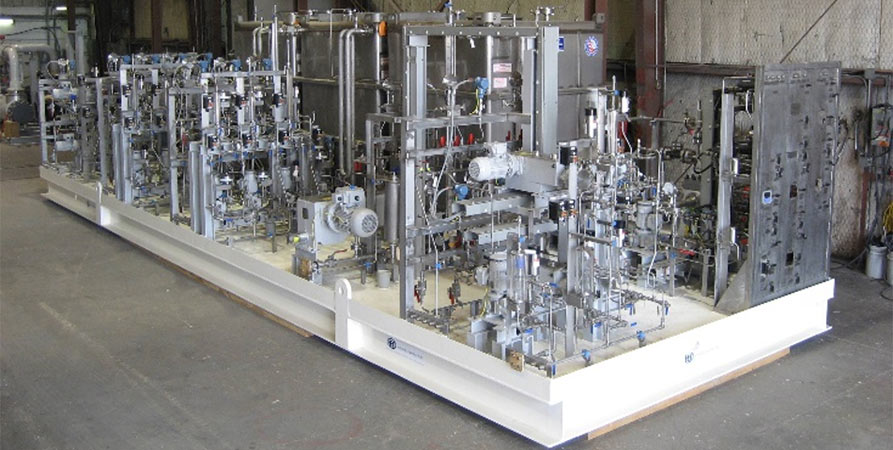
A chemical metering system is an engineered arrangement of equipment used to inject a defined amount of chemical into a process stream in a controlled and repeatable way. Unlike simple chemical dosing, which may rely on a single pump or manual adjustment, a chemical metering system maintains accuracy across changing operating conditions. The system typically includes chemical storage, metering pumps, instrumentation, controls and piping arranged so the chemical reaches the injection point at the required rate and pressure.
From a design perspective, the pump alone does not define the system. A metering pump can only perform as well as the suction conditions, controls and discharge piping allow, which is why chemical metering systems are engineered as complete packages rather than collections of individual components. These systems are commonly used in process facilities where injection reliability affects equipment condition and operating stability.
Core elements of chemical metering system design include:
Chemical Storage Tanks
Chemical storage tanks support continuous injection and stable suction conditions. Tank sizing is based on injection rate, refill intervals and operating philosophy rather than convenience alone, as undersized tanks can create suction instability while oversized tanks increase handling and safety risk.
Material selection is driven by chemical compatibility and environmental exposure. In O&G applications, tanks are commonly equipped with secondary containment, inventory instrumentation, vents and drains to support operation and maintenance.
Chemical Metering Pumps
The chemical metering pump delivers a controlled volume of chemical into the process, but it does not operate in isolation. Pump selection is based on required flow rate, discharge pressure, chemical properties and accuracy requirements. Diaphragm and plunger style positive displacement pumps are commonly used for repeatable flow across operating conditions.
The selected pump must be compatible with suction conditions and downstream piping. A correctly sized pump can still perform poorly if suction piping is improperly designed or if discharge conditions are unstable, which is why pump selection is tied to overall system design rather than treated as a standalone decision.
Instrumentation & Controls
Instrumentation and controls are a core part of chemical metering system design. Typical measurements might include tank inventory, discharge pressure and flow indication. Control strategies may be manual / automated, local or integrated with plant control systems. Alarm and shutdown logic is used to limit off-target injection rates and respond to abnormal operating conditions.
Piping, Valves & Injection Points
Piping and valve design plays a major role in system reliability. Materials must be compatible with the injected chemical and suitable for operating pressure and temperature. Proper routing minimizes trapped gas, excessive pressure losses and maintenance challenges.
Injection points introduce the chemical into the process stream in a controlled way without creating erosion, corrosion or backflow issues. Poorly designed injection hardware can negate the benefits of accurate metering upstream.
How Design Choices Affect Chemical Metering Performance
A chemical metering system moves a known, finite volume of chemical from storage to an injection point at a controlled and repeatable rate. Chemical is drawn from storage under stable suction conditions, delivered through the metering pump and discharged into the process through designed piping and injection hardware.
Injection rate control and overall system behavior can be influenced by factors such as:
- Pump speed or stroke control with instrumentation used to verify delivered flow
- Suction piping design and the presence of trapped gas or off-gassing chemicals
Common applications of chemical metering systems include:
Corrosion Inhibition
- Injection into production, pipeline and processing systems
- Injection rate tied to process flow conditions
- Over-injection increases chemical usage with limited benefit
- Under-injection allows corrosion to progress over time
Methanol & Specialty Chemical Injection
- Used for hydrate prevention and flow assurance
- Common in offshore and cold environment operations
- Often requires higher injection pressures
- System design and redundancy influence performance during transient conditions
Separation & Process Optimization
Chemical metering systems can also support oil, gas and water separation by injecting demulsifiers, antifoam agents or other specialty chemicals. Consistent dosing helps stabilize separation performance and reduce downstream processing issues.
Benefits Driven by Chemical Metering System Design
Proper chemical metering can lead to several practical operating benefits:
- Reduced corrosion, scaling and hydrate formation through controlled chemical injection
- Fewer process upsets and lower unplanned maintenance due to consistent dosing
- Improved predictability in system performance and chemical usage (along with lower overall chemical consumption)
Factors That Influence Chemical Metering System Design
- Flow rate and pressure requirements at the injection point
- Chemical properties such as corrosivity, viscosity and off-gassing behavior
- Environmental conditions including onshore versus offshore service and ambient temperature ranges
- Suction conditions and piping layout, which often have a strong influence on performance
- Redundancy and reliability needs for continuous or safety-related injection services
In many industrial and oil and gas applications, chemical metering systems include redundant pumps or spare capacity to maintain injection during maintenance or equipment failure. Packaged systems are often configured with two metering pumps, each sized for full injection rate, so chemical addition can continue if one pump is taken out of service. Operator access and maintenance considerations also shape system layout, as poorly arranged systems can be difficult to service safely and consistently over their operating life.
Chemical Metering Systems vs. Simple Chemical Dosing
Simple chemical dosing
- Manual / semi-manual adjustment
- Limited feedback on actual injection rates
- Higher variability as process conditions change
Chemical metering systems
- Controlled positive displacement pumping
- Instrumented verification of injection rates
- Lower variability across changing operating conditions
Safety Considerations in Chemical Metering System Design
Safety is largely a result of system design rather than something added later. Chemical metering systems are designed with containment, isolation and pressure management in mind to limit exposure during normal operation and maintenance.
Common design considerations include secondary containment for storage tanks, relief devices on discharge piping, isolation valves for maintenance and alarm logic tied to abnormal pressure or flow conditions. Operator access, drain and vent locations and maintenance clearances also influence how safely the system can be operated over its service life. System design commonly follows applicable industry codes for pressure piping, metering pumps, structural supports and chemical storage based on service conditions and site requirements.
Learn More About DXP/IFS Skid Mounted Modular Packages
DXP/IFS designs and manufactures custom chemical metering and chemical injection systems for process facilities. These systems are engineered as complete, skid mounted modular packages with component selection and layout configured to meet specific process requirements rather than generic configurations.
To learn more, contact us to discuss system design options and capabilities.